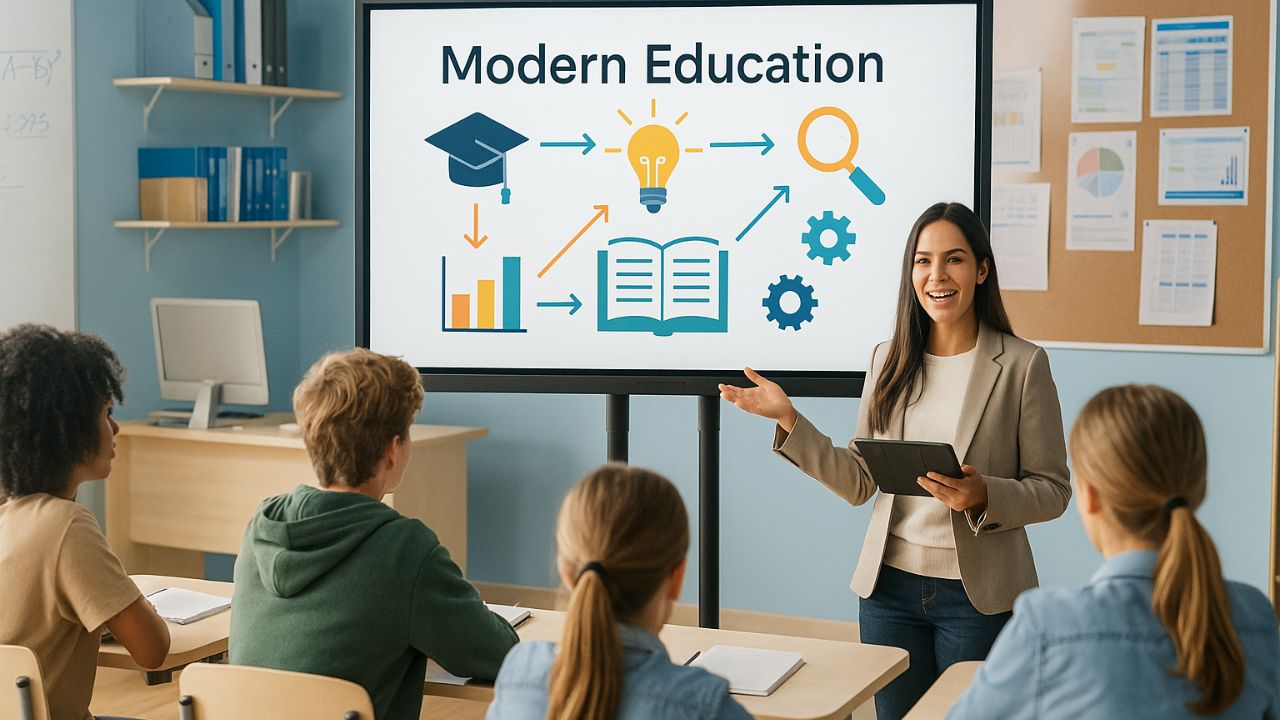
Modern Education System – At the forefront of teacher education in India, http://sbsbed.org.in/ has been shaping the next generation of competent, ethical, and value-driven educators. This esteemed institution offers a comprehensive curriculum designed to equip aspiring teachers with the knowledge, skills, and methodologies required for modern classrooms. With a strong emphasis on both theoretical learning and practical training, SBS B.Ed. College ensures that students develop critical thinking, innovative teaching approaches, and classroom management techniques. The college’s dedicated faculty guides learners through interactive sessions, workshops, and field-based teaching experiences. By blending traditional educational values with contemporary learning strategies, the college fosters an environment where future educators are prepared not only to teach effectively but also to inspire students across diverse educational settings. Its NCTE approval and university affiliation further underscore its credibility, making it a trusted choice for individuals seeking professional teaching careers. Through partnerships with educational organizations, SBS B.Ed. College also promotes ongoing professional development and lifelong learning opportunities.
The Importance of Modern Learning Strategies in Education
In today’s rapidly evolving world, modern learning strategies play a crucial role in enhancing the educational experience. Traditional rote-based teaching is gradually giving way to methods that emphasize understanding, creativity, and critical thinking. Techniques such as project-based learning, flipped classrooms, and digital learning platforms allow students to engage actively with content rather than passively receiving information. According to <a href=”https://www.edutopia.org/article/5-innovative-approaches-teaching-learning”>Edutopia</a>, integrating technology in education enhances collaboration, motivation, and conceptual understanding. Moreover, differentiated instruction ensures that teaching methods are tailored to the diverse needs of students, addressing varied learning styles and abilities. Modern strategies also incorporate formative assessment tools to provide real-time feedback, enabling learners to identify gaps in understanding and improve continuously. Educators trained in these strategies, like those at SBS B.Ed. College, are better equipped to create dynamic, student-centered classrooms. By adopting these innovative approaches, schools can foster an environment where students are not just absorbing knowledge but developing the critical skills needed for lifelong learning and success in a competitive world.

Role of Technology in Transforming Classrooms
Technology has become an indispensable tool in modern education, transforming how educators teach and students learn. Digital tools such as interactive whiteboards, educational apps, and online learning platforms enable personalized and engaging instruction. According to <a href=”https://www.weforum.org/agenda/2023/02/how-technology-transforming-education/”>World Economic Forum</a>, the integration of technology in classrooms facilitates self-paced learning, global collaboration, and access to diverse learning resources. Teachers can track progress using learning management systems, identify struggling students, and provide targeted support. Additionally, virtual reality (VR) and augmented reality (AR) offer immersive experiences that enhance understanding of complex concepts, from science experiments to historical simulations. At institutions like SBS B.Ed. College, future educators are trained to utilize these technological tools effectively, ensuring they can design engaging lesson plans that cater to digital-native students. By embracing technology, education becomes more interactive, inclusive, and adaptable, preparing students for future academic challenges and careers that increasingly demand technological proficiency.
Integrating Critical Thinking and Problem-Solving Skills
Modern education emphasizes not only knowledge acquisition but also the development of critical thinking and problem-solving abilities. Critical thinking enables students to analyze information objectively, question assumptions, and make informed decisions, which are essential skills in today’s knowledge-driven society. Research highlighted by <a href=”https://www.sciencedirect.com/science/article/pii/S0742051X20304281″>ScienceDirect</a> indicates that teaching strategies incorporating case studies, debates, and collaborative projects significantly improve analytical and decision-making skills. Institutions like SBS B.Ed. College prepare educators to foster these competencies in their students by designing activities that challenge conventional thinking and encourage creative solutions. Problem-solving exercises and experiential learning projects not only deepen comprehension but also boost confidence and resilience. Educators trained in these methods can create a classroom culture where students feel empowered to explore, question, and experiment, ultimately cultivating innovative thinkers ready to tackle real-world problems effectively.
Building Future-Ready Educators Through Experiential Learning
Experiential learning bridges the gap between theory and practice, allowing students to apply knowledge in authentic situations. This approach emphasizes hands-on experiences, reflective practices, and continuous feedback, which are vital for effective teaching. According to experiential learning helps learners retain knowledge longer and develop essential interpersonal and professional skills. SBS B.Ed. College integrates classroom observations, teaching practicums, and community-based projects into its curriculum, ensuring that future educators gain practical exposure before stepping into professional roles. By engaging with real-world challenges, students learn to adapt their teaching strategies, manage diverse classroom environments, and address individual student needs. This experiential approach not only enhances teaching competence but also instills confidence, empathy, and ethical responsibility, producing educators who are well-prepared to meet the demands of modern education and inspire meaningful learning outcomes in their students.